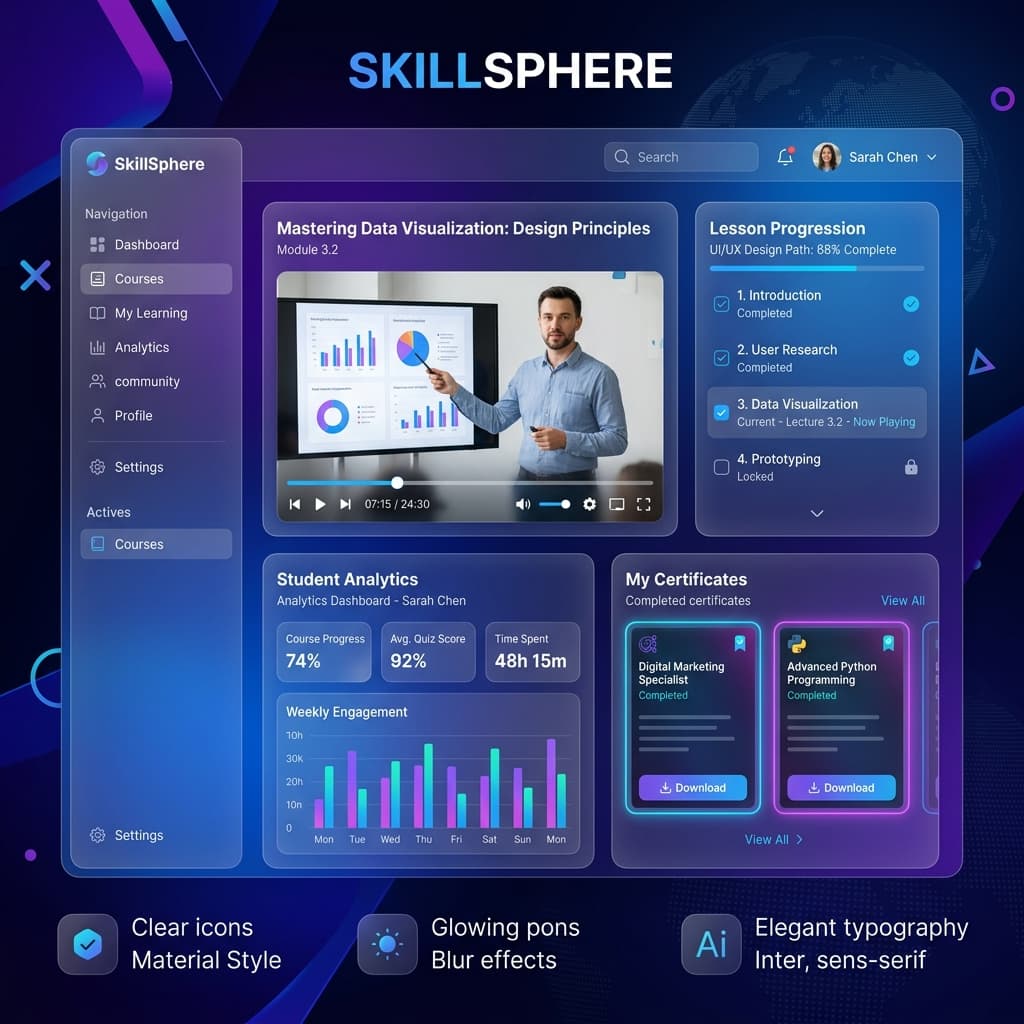
Building a Learning Management System: What You Need to Know
Learning management systems (LMS) are increasingly common in Kenya. Education platforms, corporate training, skill development — they all need LMS infrastructure.
But building one is complex. If you're considering it, you need to understand what goes into it, what it costs, and how long it takes.
What Is an LMS?
An LMS is a platform where educators teach and learners learn. It typically includes:
- Course structure (modules, lessons, sessions)
- Content delivery (videos, documents, live sessions)
- Assessments (quizzes, assignments, exams)
- Progress tracking and reporting
- Certificates and completion tracking
- Student dashboards and analytics
- Communication tools (forums, messaging, support)
Core Components You Need to Build
1. Content Management
Educators need to:
- Create and organize courses
- Upload video content and documents
- Structure lessons and modules
- Set prerequisites and dependencies
- Manage course schedules and timelines
This is more complex than it sounds. Video hosting alone requires decisions about storage, streaming, quality levels, and bandwidth.
2. Student Experience
Learners need:
- Clear course navigation
- Video playback with progress tracking
- Download materials
- Submit assignments
- View grades and feedback
- Track progress and completion
The UI/UX here matters enormously. Poor navigation = high dropout rates.
3. Assessments
Building assessment tools involves:
- Multiple question types (multiple choice, short answer, essay)
- Automatic grading (for objective questions)
- Manual grading workflows (for subjective answers)
- Grade aggregation and reporting
- Plagiarism detection (optional but important)
- Retake policies and test security
4. Live Sessions
If you're offering live classes:
- Video conferencing integration (Zoom, Google Meet, custom)
- Attendance tracking
- Recording and archiving
- Q&A and chat during sessions
- Breakout rooms and engagement tools
5. Analytics & Reporting
Educators need to see:
- Student progress per course
- Completion rates and timelines
- Assessment performance
- Engagement metrics (time spent, logins, activity)
- Identification of at-risk students
6. Payments & Enrollment
If you're monetizing:
- Course pricing and bundling
- Payment processing (M-Pesa, Stripe, cards)
- Enrollment workflows
- Access control (who can see what)
- Refund policies
7. Certificates & Credentials
- Automatic certificate generation
- Verification system (students can prove they took the course)
- Digital or PDF format
- Blockchain verification (optional, nice-to-have)
Tech Stack Considerations
An LMS requires decisions about:
Frontend:
- Web application (React, Vue, Next.js)
- Mobile apps (iOS/Android) — yes or no?
- Accessibility (WCAG compliance)
Backend:
- API design for scalability
- Database (PostgreSQL, MongoDB)
- File storage (cloud: AWS S3, Google Cloud)
- Video hosting (Vimeo, Wistia, self-hosted)
Infrastructure:
- Hosting (AWS, Google Cloud, local)
- CDN for video delivery
- Email service for notifications
- Payment gateway integration
Real example:
For an LMS serving 5,000+ students with live sessions and custom assessments, you're looking at:
- Frontend: React web + React Native mobile
- Backend: Node.js or Python
- Database: PostgreSQL
- Storage: AWS S3 for content
- Video: Vimeo for streaming
- Hosting: AWS or Google Cloud
- CDN: Cloudflare
That's a solid, scalable stack.
Cost Breakdown
For a Kenya-based LMS serving 1,000-5,000 students:
Development Cost:
- MVP (basic LMS): KES 800k - 1.5M ($5.5k - $10k)
- Basic course structure, videos, simple assessments
- Web only, no mobile
- 2-3 months build time
- Full-featured LMS: KES 1.5M - 3.5M ($10k - $25k)
- All core features above
- Web + iOS/Android
- Analytics, reporting
- 3-6 months build time
- Enterprise LMS: KES 3.5M+ ($25k+)
- All of the above
- Advanced features (AI tutoring, adaptive learning)
- High performance for 10k+ users
- White-label options
- 6+ months build time
Hosting & Infrastructure (Monthly):
- Small (1k students): KES 30k - 80k ($200 - $550)
- Medium (5k students): KES 80k - 200k ($550 - $1,400)
- Large (10k+ students): KES 200k+ ($1,400+)
First-Year Total (for medium LMS):
- Development: KES 1.5M - 3.5M
- Hosting (12 months): KES 960k - 2.4M
- Domain/SSL/misc: KES 50k
- Total: KES 2.5M - 6M ($17k - $40k)
Timeline Expectations
Simplified Timeline:
| Phase | Duration | What Happens |
|---|---|---|
| Planning & Design | 2-3 weeks | Define features, user flows, technical architecture |
| Backend Development | 6-8 weeks | APIs, database, payment/enrollment, video hosting |
| Frontend Development | 6-8 weeks | Web interface, student dashboards, teacher tools |
| Testing & QA | 2-3 weeks | Bug fixes, performance testing, security |
| Launch & Training | 1-2 weeks | Server setup, data migration, team training |
| Total | 4-6 months |
If you add mobile apps, add 4-8 weeks.
Common Mistakes to Avoid
Mistake 1: Building Mobile First
Your users are mostly on mobile, so build mobile first, right?
Wrong. Web is easier to build and iterate on. Get web working well, then mobile.
Mistake 2: Overcomplicating Assessment
You don't need every assessment feature upfront. Start with:
- Multiple choice quizzes (auto-graded)
- Assignment submission
- Manual grading
Add complexity later based on actual need.
Mistake 3: Ignoring Performance
Video streaming is bandwidth-intensive. If your LMS lags or buffers, students leave.
Budget for CDN, test video delivery, optimize from the start.
Mistake 4: No Mobile Responsiveness
"We'll build the mobile app later" — don't do this. 60% of learners are on mobile. Your web platform must work on phones from day one.
Mistake 5: Not Planning for Scale
You launch with 100 students. It works fine. You scale to 1,000 and everything breaks.
Design for 3-5x your launch size from the beginning.
Should You Build or Buy?
Build Custom If:
- You have unique pedagogical needs
- You need features off-the-shelf doesn't offer
- You want to own your student data
- Your requirements are very specific to Kenya
Buy Existing Platform If:
- You want to launch fast (weeks, not months)
- You have standard needs
- You don't mind monthly licensing costs
- You want vendor support
Hybrid If:
- Buy a base platform (Moodle, Canvas)
- Customize it to your needs
- Faster than building from scratch, more control than pure SaaS
Real Examples in Kenya
Several Kenyan education platforms built custom LMS:
Raed Academy — Custom LMS built for bilingual delivery (English + Arabic), live Zoom integration, certificate generation. Serves 3,000+ students.
Taqriib — Custom LMS for Islamic education with semester structure, bilingual content (English + Somali), recorded + live delivery. Serves thousands of students.
Both chose custom because off-the-shelf didn't handle their specific needs (bilingual, specific pedagogies, regional focus).
Getting Started
If you're building an LMS:
1. Define your core audience — Who are learners? What devices do they use?
2. List essential features — What must be there day one? What can wait?
3. Choose your tech stack — Web? Mobile? Video hosting approach?
4. Get a realistic estimate — Cost and timeline from developers
5. Start with MVP — Launch with core features, expand based on user feedback
An LMS is a significant investment, but for serious educational organizations, it's often the right one.
Building an LMS in Kenya? We've built several. Let's discuss your platform.